Key Differences in Laid Scrim Materials Explained
Key Differences in Laid Scrim Materials Explained
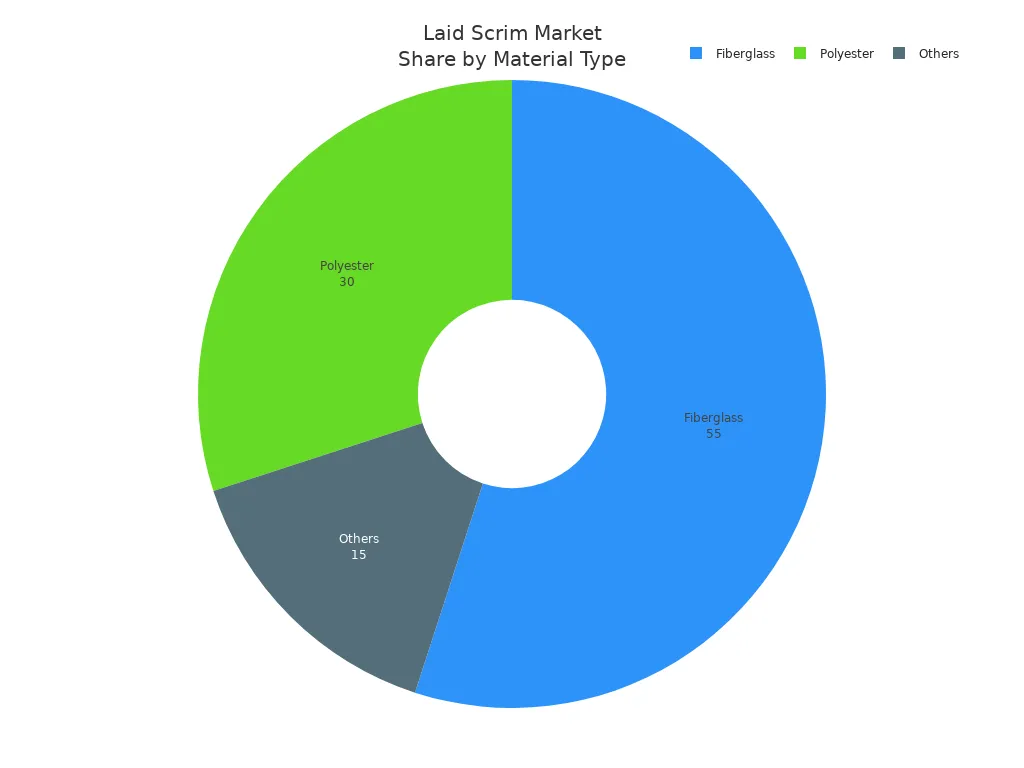
You notice many differences when you compare Laid Scrim materials. Fiber composition changes how strong and flexible each product feels. Thickness affects weight and tear resistance. Polyester Laid Scrim and Fiberglass Laid Scrim lead the market, as shown in the chart below.
Durability and environmental impact shape your choices for Triaxial Scrim Reinforce Mat, Triaxial Laid Scrim Netting, and other Laid Scrims. You select materials based on how well they match your project’s needs.
Key Takeaways
- 1.Laid Scrim materials enhance strength and stability in various products, making them essential in construction, automotive, and medical applications.
- 2.Different types of Laid Scrim, like polyester and fiberglass, offer unique benefits. Choose based on your project’s specific needs for strength, flexibility, and durability.
- 3.Eco-friendly options exist for Laid Scrim materials. Selecting these can reduce environmental impact and support sustainability in your projects.
- 4.Customization is key. You can adjust fiber type, mesh size, and coatings to match your project requirements, ensuring optimal performance.
- 5.Always consider cost versus benefits. Higher-priced materials may offer better durability and performance, which can save money in the long run.
- You may wonder what makes Laid Scrim materials special. These materials play a key role in many industries. They help reinforce, stabilize, and improve the performance of other products. You find them in items that need extra strength or support.
- Laid Scrim materials boost durability in composite products.
- They add stability, so products last longer and perform better.
- You can customize them for different uses, such as construction or marine projects.
When you look at Laid Scrim, you see a grid or mesh made from fibers. Manufacturers design these grids to fit many needs. You get to choose the fiber type, thickness, and pattern. This flexibility lets you match the material to your project.
- You see Laid Scrim materials in many places. They work behind the scenes to make products stronger and more reliable. Here are some common uses:
- Construction: You find them in paving and roofing. They help these materials resist cracking and last longer.
- Medical: Bandages and wound dressings use Laid Scrim for support and shape.
- Automotive: Car parts use these materials to stay light but strong.
- Industrial: Factories use them in protective covers and filtration systems.
- Other sectors: Packaging and geotextiles also rely on Laid Scrim for added strength.
The medical field uses more Laid Scrim every year. New medical supplies and better healthcare drive this growth. You benefit from safer, more effective products because of these materials.
You may want a greener choice for your project. Many eco-friendly Laid Scrim materials now exist. These products use recycled or recyclable materials and sometimes meet special certifications. The table below lists some common options:
| Product Name | Description | Certifications/Claims |
|---|---|---|
| Ecobanner™ | Recyclable banner material, reduces landfill waste. | N/A |
| Landmark® Recycled | Made from retired tarpaulins, supports sustainable fabric use. | N/A |
| Landmark® Edge | Built for harsh conditions, fully recyclable. | N/A |
| Brattice J™ | Fire-retardant, anti-static, FRAS-certified for mining. | FRAS |
| Aquamark® Plus | Fire protection, meets AS2304:2011 standard. | AS2304:2011 |
You help the environment when you choose these options. Some products even use old materials to make new scrim, which supports recycling and reduces waste.
Eco-Friendly Options
You find carbon fiber scrim in projects that demand the highest strength and stiffness. This material stands out because it handles heavy loads and resists fatigue, which means it keeps working even after many cycles of stress. You see it in aerospace, automotive, and wind energy applications.
Here is a table showing the main types of carbon fiber scrim and their properties:
| Type | Tensile Strength (MPa) | Modulus (GPa) | Typical Use |
|---|---|---|---|
| Standard Modulus (SM) | 3,500 | 230 | General purpose, cost-efficient |
| Intermediate Modulus (IM) | 4,500 | 280 | Automotive, wind energy |
| High Modulus (HM) | 2,800–4,000 | 500+ | Aerospace, precision structures |
Fiberglass Scrim
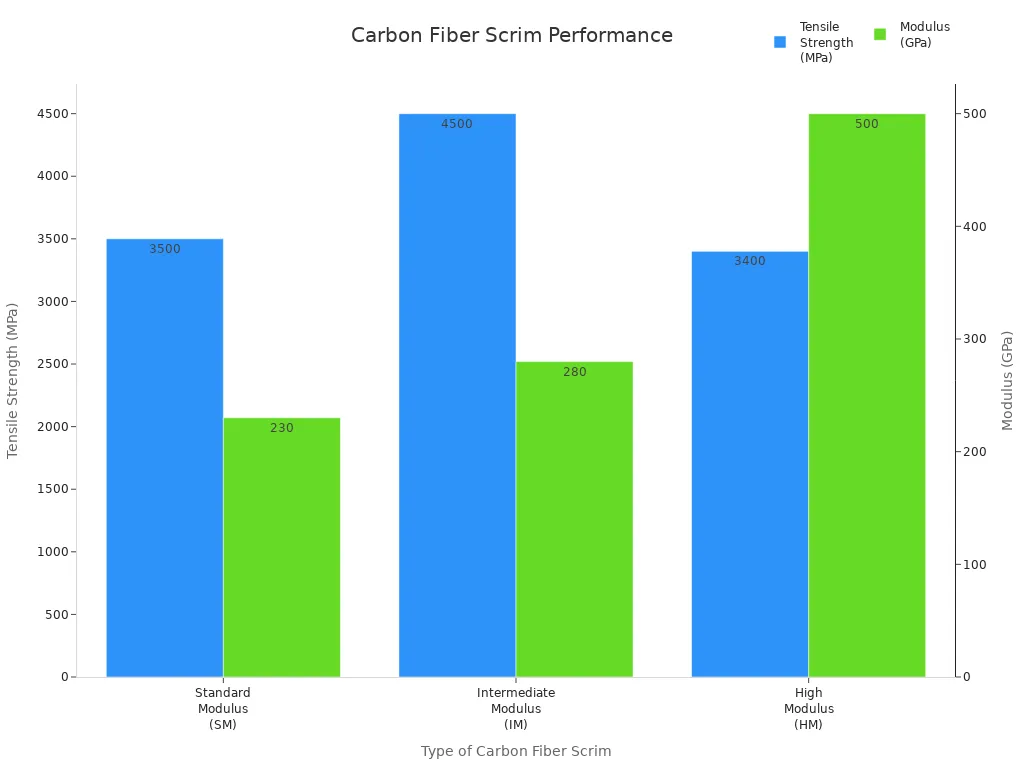
You notice that carbon fiber scrim is strongest along the direction of the fibers. This property, called anisotropy, means you must design carefully for the direction of the load. You also benefit from its excellent fatigue resistance, which is important in high-stress environments.
- Carbon fiber scrim can fail suddenly without warning.
- You need to watch for issues like fiber breakage, matrix cracking, delamination, or buckling.
- Understanding these risks helps you build safer, longer-lasting structures.
If you want a Laid Scrim that delivers top performance in demanding conditions, carbon fiber scrim is a smart choice.
Carbon Fiber Scrim
Durability tells you how well a scrim will hold up over time. You want a material that can handle weather, sunlight, and stress without breaking down. Some scrims, like fiberglass and polyester, last a long time outdoors. Others, like bamboo or cotton, may lose strength faster.
Tests on bamboo scrimbers show that heat and aging can make them weaker. For example, after accelerated aging, untreated bamboo scrimbers lost about 1.57% of their bending strength. When treated at high temperatures, they lost even more—up to 4.69%. Shearing strength also dropped, especially with more heat. This shows that both the type of fiber and how it is treated affect how long your scrim will last.
You should think about where you will use the scrim. If your project faces lots of sun, rain, or chemicals, pick a scrim that resists these things. Polyester and fiberglass are good choices for tough conditions.
- Fiberglass: Great for outdoor use, resists UV and moisture.
- Polyester: Handles weather well, keeps its shape.
- Cotton or bamboo: Best for indoor or short-term use.
Aramid Scrim
You often choose aramid scrim when you need a material that is both strong and lightweight. Aramid fibers, such as Kevlar®, give you high tensile strength and excellent resistance to impact. You see aramid scrim in protective clothing, sports equipment, and even in aerospace parts.
Aramid scrim stands out because it does not melt and can handle high temperatures. You also get good resistance to abrasion and chemicals. This makes it useful in harsh environments where other materials might fail.
- You benefit from aramid scrim’s flexibility and toughness.
- It helps protect against cuts and punctures.
- You can use it in safety gear, like gloves and helmets.
Aramid scrim costs more than some other options, but you gain extra protection and durability. When safety and performance matter most, aramid scrim gives you peace of mind.
Material Properties Overview
You can customize scrim materials in many ways to fit your project. You get to choose the fiber type, mesh size, and even special coatings. This helps you get the right balance of strength, flexibility, and appearance.
Here are some common customization options and how they help you:
| Customization Option | Impact on Performance |
|---|---|
| Anti-Reflective Coatings | Reduce glare and hotspots. Improve visibility. |
| Matte Finishes | Diffuse light. Prevent unwanted reflections. |
| Custom Sizes and Shapes | Fit your space perfectly. No wasted material. |
| Multi-Layer Scrims | Combine strength and opacity. Handle complex needs. |
| Logo or Pattern | Add branding. Make your project unique. |
You can also pick from many fiber types, such as glass, polyester, carbon, cotton, flax, jute, viscose, Kevlar, or Nomex. Each fiber gives you different properties. For coatings, you might choose PVOH, PVC, acrylic, or a custom blend. These coatings can add water resistance, fire resistance, or other features.
Note: Customization lets you match the scrim to your exact needs. Talk to your supplier about all the options before you decide.
When you compare Laid Scrim materials, always look at strength, durability, and customization. These factors help you pick the best material for your project and make sure it works well for a long time.
Durability
You need to think about cost when you choose a scrim material. Prices can change a lot depending on the fiber type and how the material is made. Some scrims cost much more than others because they use special fibers or need extra processing.
Here is a simple guide to average market prices for common scrim materials:
- Fiberglass scrim usually costs between $1.50 and $5.00 for each square foot. You get good value for projects that need strength and weather resistance.
- Carbon fiber scrim is much more expensive. You might pay $10 to $50 or more for each square foot. You pay more because carbon fiber is very strong and light.
- Aramid scrim, like Kevlar, is priced by weight. The average cost is $10 to $20 for each kilogram. You pay for extra protection and toughness.
- Polyester scrim often costs less than fiberglass or carbon fiber. It gives you a balance of price and performance.
- Eco-friendly scrims can cost more or less, depending on the recycled content and certifications.
You should always compare the cost to the benefits you get. Sometimes, a higher price means better performance or longer life. For big projects, even a small price difference can add up fast.
Cost
Environmental Impact
Construction and Building
Customization
You need to match the right scrim properties to your building project. The weave type changes how strong and stable your material will be. A tighter weave gives you more strength and keeps the shape steady, which works well for load-bearing jobs. A looser weave lets in more air and light but may not hold up as well under stress.
| Weave Type | Effect on Strength and Durability |
|---|---|
| Tighter Weave | Enhances strength and dimensional stability, ideal for load-bearing applications. |
| Looser Weave | Allows greater airflow and light diffusion, which may compromise strength. |
You should also look for these features:
- 1.Dimensional stability keeps the material from stretching or shrinking.
- 2.Tensile strength helps it resist breaking.
- 3.Alkali resistance protects against chemicals.
- 4.Tear resistance stops rips.
- 5.Fire resistance adds safety.
- 6.Anti-microbial properties fight mold and bacteria.
- 7.Water resistance keeps it strong when wet.
These qualities help you choose the best scrim for roofing, wall reinforcement, or insulation.
Construction and Building
You want your packaging or industrial product to last and protect what is inside. The right scrim material depends on what you need. Fiberglass works well if you need alkali resistance. Polyester gives you flexibility and strength. Heavier mesh, from 60gsm to 160gsm, adds more support.
| Consideration | Explanation |
|---|---|
| Material Composition | Choose fiberglass for alkali resistance or polyester for tensile strength and flexibility. |
| Mesh Weight & Density | Heavier mesh (60gsm to 160gsm) offers greater reinforcement. |
| Tensile Strength | Should exceed 50 N/cm in both warp and weft directions for durability. |
| Compliance | Must meet relevant standards like ASTM or EN to ensure quality and safety. |
| Supplier Reputation | Prefer suppliers with over 5 years in business and positive reviews for reliability. |
| Order Volume Flexibility | Ability to order smaller quantities (e.g., 1,000 sqm) can be important for project needs. |
| Pricing Transparency | Clear, tiered pricing helps in budgeting and cost planning. |
| Repeat Order Rate | High repeat purchase rates indicate consistent quality and service. |
| System Compatibility | Ensure the mesh works well with your adhesives or coatings. |
| Total Cost of Ownership | Consider waste, labor, and longevity to evaluate overall cost-effectiveness. |
| Delivery & Logistics | Fast and reliable shipping reduces delays and additional costs. |
If you want to lower your environmental impact, pick scrims made from recycled polyester or natural fibers. You can also look for manufacturers who use less water and energy and choose natural dyes.
DIY and Home Projects
Project Requirements Checklist
You want to make sure you pick the best material for your project. Use this checklist to guide your decision:
- Define the GSM (grams per square meter) you need and set a thickness tolerance (±5%).
- List the tensile strength you require for both the warp and weft directions.
- Choose a lamination method, such as PES or PVC, that matches your chemical resistance needs.
- Ask your supplier if they can provide batch-specific test reports.
- Request physical samples and run peel or adhesion tests yourself.
- Confirm the minimum order quantity (MOQ) and lead time in writing.
- Check for third-party certifications like ISO or REACH and make sure the numbers are valid.
- Discuss after-sales terms, including defect replacement and return logistics.
Tip: Always keep a written record of your requirements and agreements with suppliers.
Tips for Selection
You can make a better choice by following these expert tips:
- Durability matters. Scrim vinyl stands up to tough weather, so it works well for outdoor banners.
- Water resistance helps your project last longer, especially in rain or snow.
- Versatility lets you use the same material indoors and outdoors, which saves time and money.
Note: Test a small sample before you buy a large amount. This helps you avoid surprises.
Decision Table
Use this table to compare your options and pick the right Laid Scrim material for your needs:
| Project Type | Key Requirement | Best Material Choice | Why It Works |
|---|---|---|---|
| Outdoor Banner | Weatherproof, strong | Scrim Vinyl, Polyester | Durable, water resistant |
| Roofing Reinforcement | High tensile strength | Fiberglass, Aramid | Handles stress, long-lasting |
| Eco-Friendly Project | Low impact, recyclable | Recycled Polyester, Cotton | Reduces waste, sustainable |
| Automotive/Aerospace | Lightweight, strong | Carbon Fiber, Aramid | High strength-to-weight |
You can use this table to match your project with the best material.
You see that fiber type, strength, and environmental impact set each Laid Scrim material apart. Polyester, fiberglass, carbon fiber, and aramid all offer different benefits. You should match your choice to your project’s needs. Think about where you will use the material and how long you want it to last. Always ask your supplier for details before you decide.
Your International Production And Customization Supply Partner
Address
Head office Add: BLDG#26,MAX Technology Park Phase II,Baoshan District,Shanghai China
Factory Add: Shanghai Ruifiber (Fengxian) Industry Park, Fengxian, Xuzhou, China
E-mail
info@ruifiber.com
ruifibersales2@ruifiber.com
Phone
Sales: 0086-159-6804-7621
Support: 0086-186-2191-5640
Hours
Monday-Friday: 9am to 6pm
Saturday, Sunday: Closed